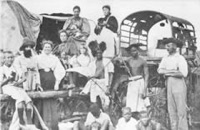
THE story of Rhodesia's pioneer women is one of sorrow and sublime courage; when families made homes in a wilderness and fought against sickness, scarcity, wars and rebellion. They were determined to establish new lives in what is today, only 80 years after, a well organized prosperous country.
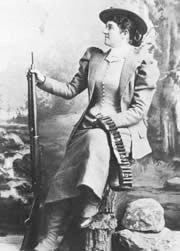
In the early days of the new territory women were debarred by the British South Africa Company. But this ruling did not stop such daring characters as "Pioneer" Mary Watson, who bluffed her way in by declaring she was the Administrator's housekeeper, or Fanny Pearson, later the Countess "Billy" de la Panouse, who disguised herself as a boy.
It takes all sorts and conditions of people to make a country - like the indomitable Mrs. McAuliffe, jogging along in her ox-wagon to Fort Salisbury, ready to open her store while her husband remained at his store somewhere below Fort Tuli, 600 kilometers away. Then, again, there was Mrs. Foy who, with her husband, walked to Salisbury from Johannesburg. She provided meals in Pioneer Street, Salisbury, and was not above assaulting any customer who failed to pay his bill.
By 1892 the new territory had begun to attract settlers and some, with as many as ten children, faced untold hardship and deprivation in order to trek to Rhodesia.
One of the most serious difficulties experienced was the lack of doctors and maternity nurses - in some areas the nearest medical help was over 160 km away.
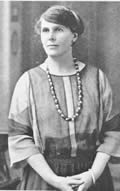
A veteran settler, Mrs. Prescott of Mangwe, who was trained by her mother, had some hair - raising experiences while hurrying, usually on horseback, many miles to urgent maternity cases. Once a messenger arrived with a powerful, and almost unrideable, stallion on which Mrs. Prescott was expected to make the journey. The river was in full flood and the stallion refused to enter the water. Mrs. Prescott dismounted, forced him into the water and, by holding his mane, swam him across.
Salisbury, at this stage, had no buildings to speak of. Material was scarce and the half a dozen women of the settlement lived in pole and dagga (mud) huts. There was little society as such, as entertaining was difficult without tables and chairs. Housekeeping was hazardous. The most simple household items, such as flour and sugar, were regarded as luxuries, and were practically unobtainable.
Those were the days of whisky box and soap-box furniture, when women made their dresses from limbo (native cloth) and complimented each other on their 25 pence Mashonaland creations.
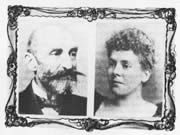
In Umtali, Mrs. Lionel Cripps, wife of the man who was to become the first Speaker" of the First Parliament of Southern Rhodesia, was finding life a little trying too. She described conditions there as a "sort of Robinson Crusoe life, with no furniture, or planks to make any with, as all the packing cases are left at Beira." Mrs. Cripps also recounts the arrival of supplies from Beira, when the women would rush out to see what had been brought - condensed milk, tinned butter, or tinned fish. "Alas it was more often whisky. Whatever else was left at the coast, whisky never remained behind !"
During the next few years life in Rhodesia achieved a certain amount of stability. In Fort Victoria, Mrs. James Mitchell finally wore the Charter Company down and obtained the first liquor license and paid £100 for the privilege of selling her home-brewed hop beer.
In Gwelo, Mrs. William Hurrell and her husband started the Horseshoe Hotel - a collection of pole and dagga huts which needed constant repairs during the rainy season. They eventually sold the hotel to Thomas Meikle who built the Midlands in its place.
The terrible rebellion' of 1896 nullified much of the progress which Rhodesia had painfully achieved - but out of the tragedy came stories of amazing courage. At the first outbreak of the rebellion round Enkeldoorn, a Mr. van der Merwe was badly wounded. With great presence of mind, his wife seized his rifle and opened fire on the attackers. Under cover of darkness she walked almost a kilometer, rounded up the oxen, in spanned them, and took her husband and four small children to safety.
In the Headlands area, Mrs. Tom Pretorius led three women and six children, one of whom was a baby of three months, 130 kilometers through attacking tribes to Umtali. When she arrived it was said her hair had turned grey.
There are many unsung heroines of those early days, such as the women of the besieged Alice Mine, the nurses whose hospitals were nothing more than wagon sails, the wives and mothers whose determination and support helped to carve a nation.
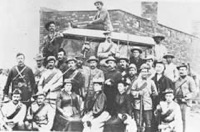
The Rhodesia Pioneers' and Early Settlers' Society was founded in September 1904, but it was not until 1934 that the Society decided to include women as members. After the decision the then secretary, Colonel Dan Judson, said: "In giving women pioneers this recognition I am not only referring to the living but also the dead, because possibly the majority of those who can be classed as pioneers are dead and gone." .